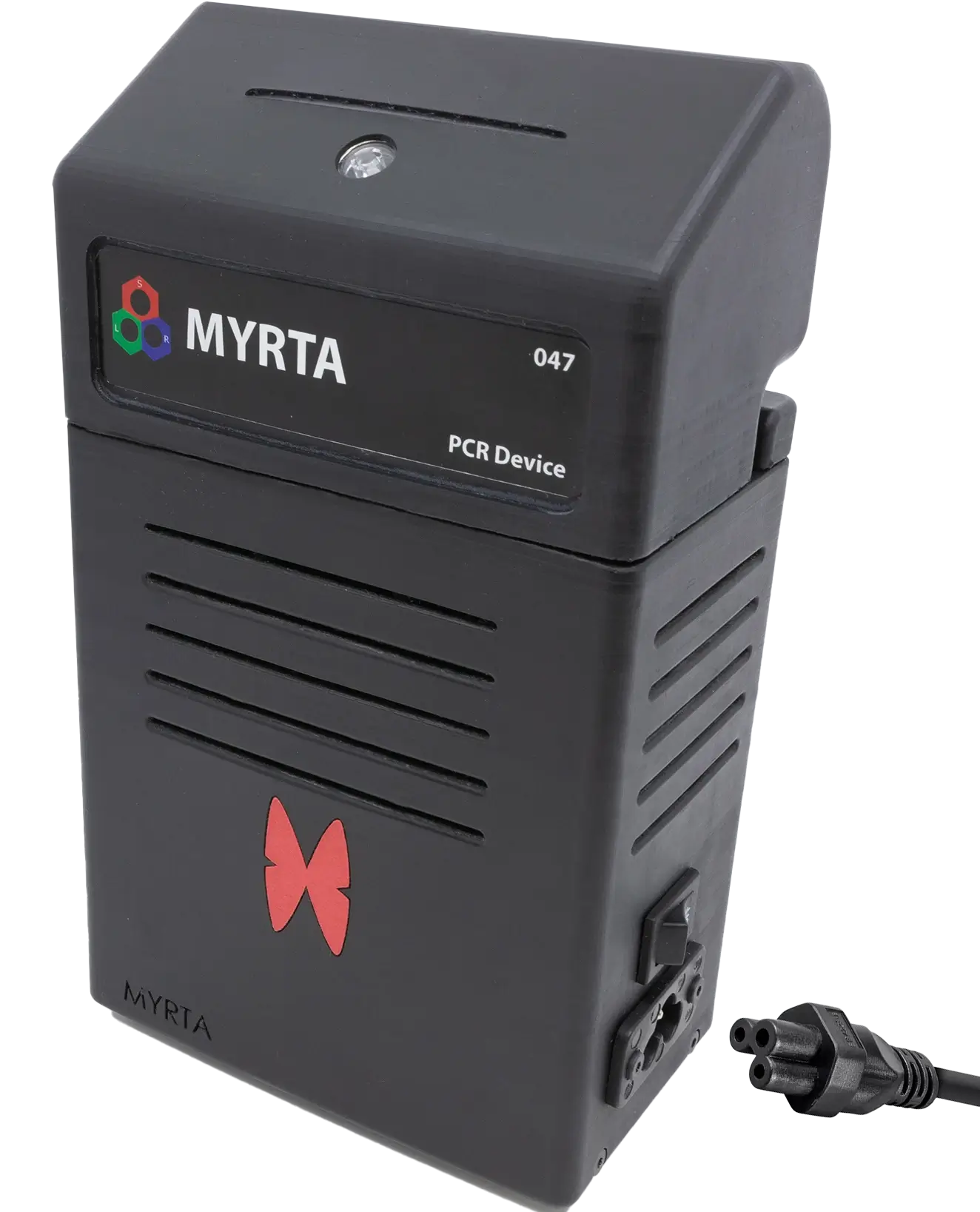
MYRTA: Handheld RT PCR
Handheld Real-Time PCR for at Home Use
C/C++
Solidworks
HCI
Mechatronics
Linux
A screenless diagnostic device using light and acoustic feedback for influenza, Covid, and other at home testing.
The Engineering Deep Dive
The MYRTA project focused on the intersection of mechatronics and human-computer interaction. The hardware core is a 2 channel fluorescence scanner mounted on a stationary heat block. This design was made to have no moving parts, to prevent any chance of the device going out of alignment. This designed solved one of the hardest parts of the Solas 8 project of triggering the scanning at the correct time.
Since the device was designed for at home use from people who may have little to no lab experience there was a lot of thought put into the design. Many screens are easily broken or hard to see in sunlight and would make the product cost too much for an home testing solution. I developed an auditory interface and light bar to communicate with the user. This wasn't just simple beeps; I used psychoacoustic principles to create musical motifs that communicated progress, success, and specific error codes (bad readings or sensor obstruction) through intuitive musical intervals and flashing lights.
Another unique aspect of the Myrta was data ownership and control. Many other devices required phone use with questionable data integrity; this design held the data internally and could be connected to a computer and accessed like a USB drive.
The Technical Post Mortem
For the MYRTA, the engineering challenge was size, cost, and usability. To keep costs low I designed everything around the TI Tiva chip. This design choice meant that all data analysis, storage, and operation had to be extremely efficient. I synchronized the optical sensor with the thermal cycling and recorded data while maintaining the ability to lose power at any time.
Since the device lacked a display, I designed a UI based on Psychoacoustics. I engineered musical intervals to communicate system status for success and for errors. This ensured users could monitor complex diagnostic runs purely by ear and be language agnostic.
Engineering Constraints
Solving for the 'Impossible' means navigating rigid physical and computational limits:
- Syncing optical sensors with temperature control.
- Designing a user interface and protocol for screenless operation.
- Thermal design in such a tight space.